Count the impressions honestly. A hoarding on a road with moderate traffic is seen tens of thousands of times a week, by the same people, for the entire life of the project. No campaign you buy will match that frequency, and it is already paid for.
Yet site branding is routinely treated as a production job — send the logo to the vendor, fit the render, print it.
Design for the distance and the speed
A hoarding is read at forty kilometres an hour from sixty metres away. That is not a design constraint, it is the entire design brief:
- One message per panel. Not three. A driver gets roughly two seconds and will take away one idea.
- Type sized for the road, not the artboard. If it looks oversized on your screen, it is probably correct.
- Contrast that survives dust, rain and dusk. Subtle tonal palettes that look refined in a PDF disappear on a real roadside in April.
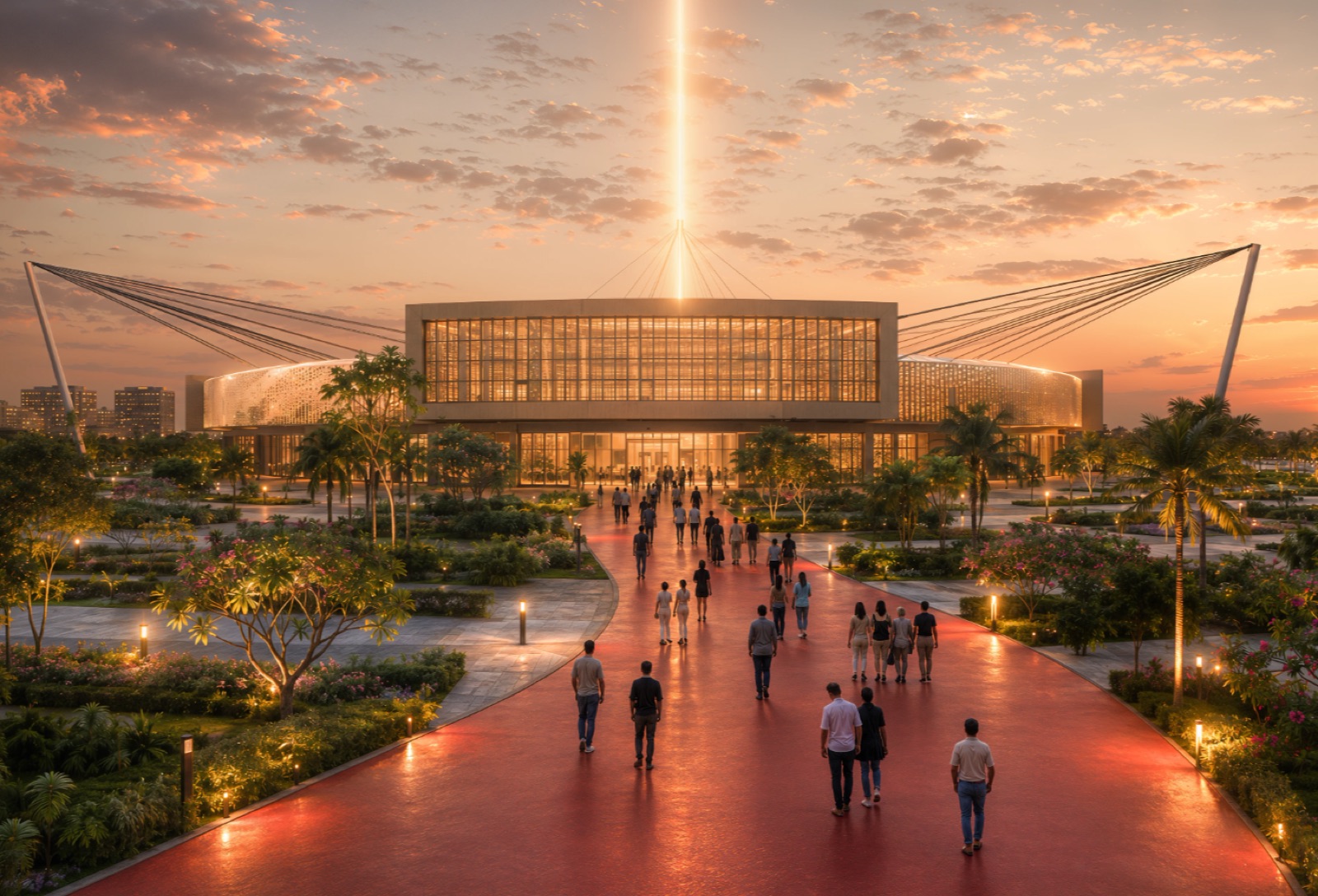
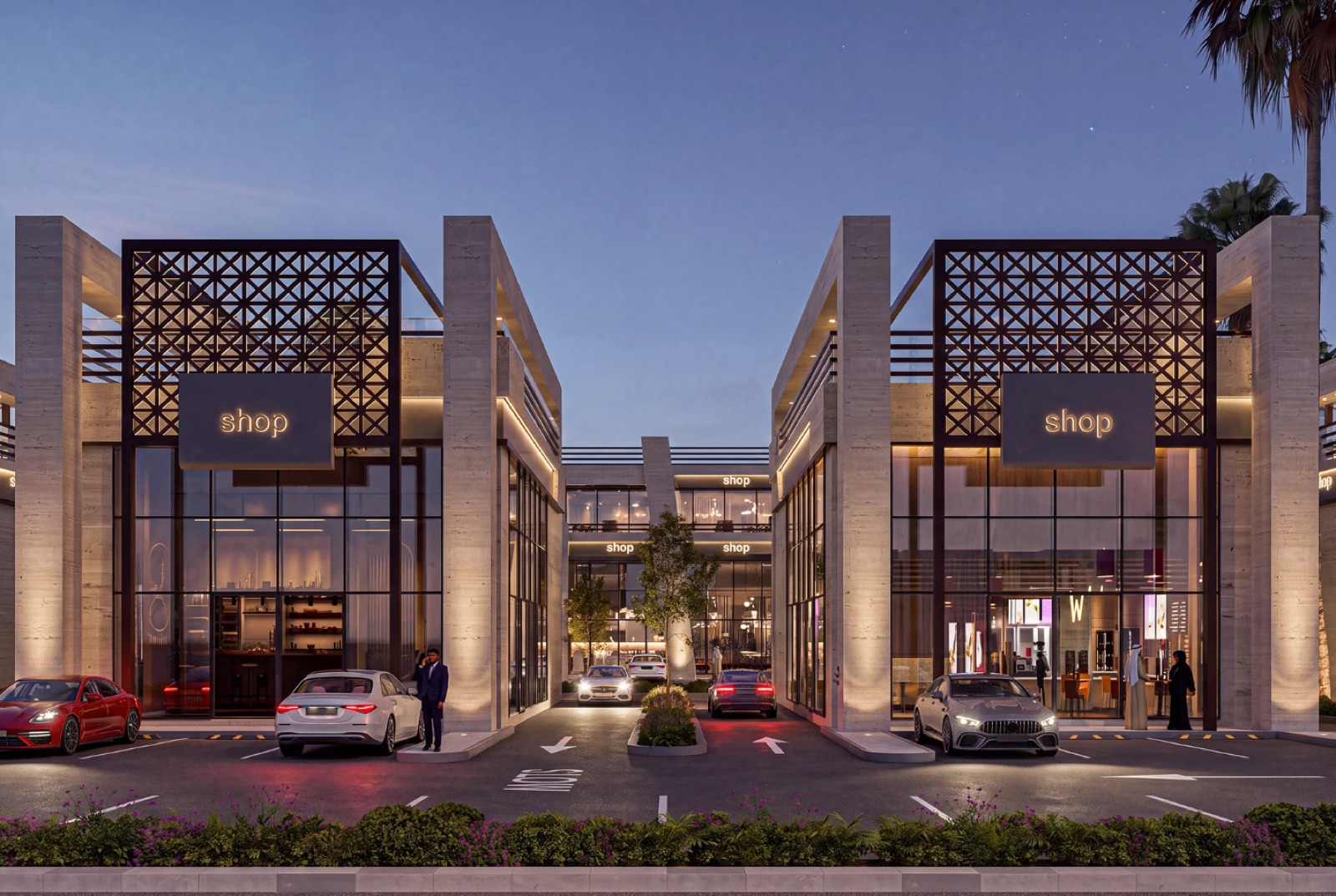
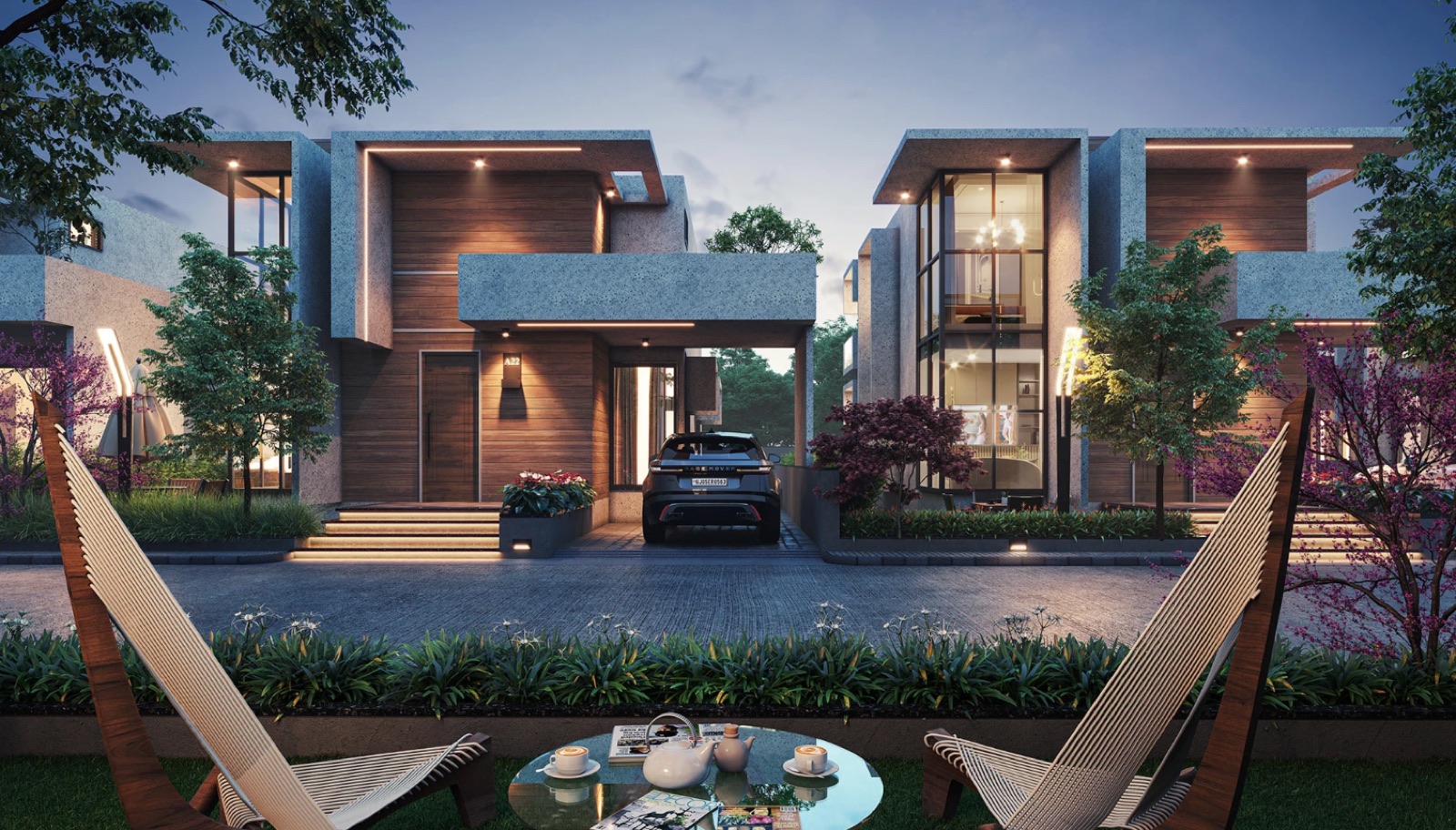
- Renders chosen for legibility. A complex dusk aerial is a gorgeous brochure image and a terrible hoarding. Pick a frame with a clear silhouette.
The site is a sequence, not a surface
Someone arriving at the site passes through a sequence, and each stage has a different job:
- The approach hoarding — recognition and the one promise.
- The entry gate and signage — reassurance that they have arrived somewhere serious.
- The site office or lounge — where the identity has to hold up at arm's length, in materials you can touch.
- The show unit — where the render finally meets reality, and any gap between them is felt immediately.
- Safety barricades, scaffold wrap, worker signage — usually unbranded, and a visible signal of how the project is run.
The show unit is the moment of truth
Every render made for the project is on trial the second a buyer walks into the show unit. If the finish, the light and the proportions match, the renders retroactively become credible and so does everything else. If they do not, the buyer quietly stops believing the marketing — and they will not tell you.
Which is why the render direction and the show unit specification should be set together, by people who talk to each other.